

PRODUCTS FOR NECK AND BACK RELIFE

Neck and back pain are common problems that can affect everyday activities, work, sleep, and overall quality of life. While appropriate treatment and targeted therapeutic exercises are essential, certain products can also help reduce unnecessary strain on the spine and make daily activities more comfortable. Ergonomic chairs, supportive mattresses, anatomical pillows, and appropriate footwear can provide better support and help the body maintain more comfortable positions throughout the day and night.
The benefits of these products are closely connected to consistent, everyday use. Our spine is affected by the positions and movements we repeat for hours each day—while sitting, working, walking, resting, and sleeping. Using supportive products regularly can help reduce repeated stress on the neck and back and complement healthy movement habits and therapeutic exercise. They are not a replacement for treatment or exercise, but they can be valuable tools for managing discomfort and supporting long-term neck and back health.
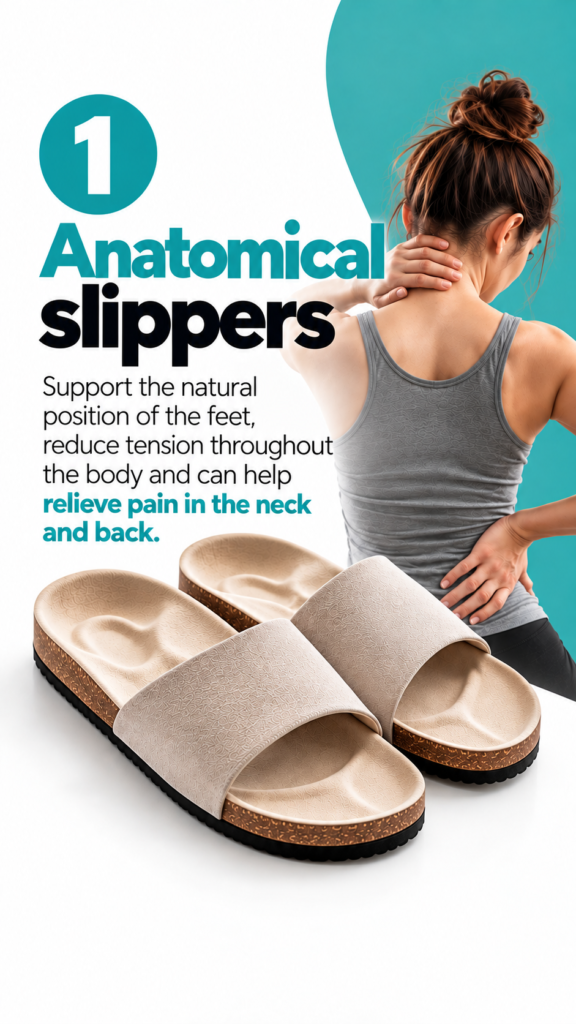
ANATOMICAL SLIPPERS
Anatomical slippers can support neck and back relief by improving foot support during everyday activities. The feet form the base of the body and influence how we stand and walk. Proper arch support can help distribute body weight more evenly. It can also reduce unnecessary strain on the feet, knees, hips, and lower back. This may support better body alignment and make daily movement more comfortable.
Choosing supportive anatomical slippers is especially important if you spend many hours standing or walking at home. Good cushioning and a stable sole can reduce repeated impact during each step. Better foot support may also help reduce compensatory movements that affect the spine. For this reason, anatomical slippers can be a useful part of a daily routine for neck and back relief, alongside therapeutic exercise and healthy movement habits.
What should anatomical slippers be like?
For better back pain relief and everyday support, anatomical slippers should provide a stable base for the feet. The right design can improve comfort while standing and walking and help reduce unnecessary stress on the lower limbs and spine.
Anatomical slippers should have:
- Good arch support to support the natural shape of the foot.
- A contoured footbed that helps distribute pressure more evenly.
- Adequate cushioning to absorb impact while walking.
- A stable, non-slip sole for safer and more controlled movement.
- Enough space for the toes without squeezing the front of the foot.
- A secure fit so the foot does not slide excessively inside the slipper.
- A comfortable heel position that supports stability while walking.
- Breathable materials for comfortable everyday use.
MATTRESS
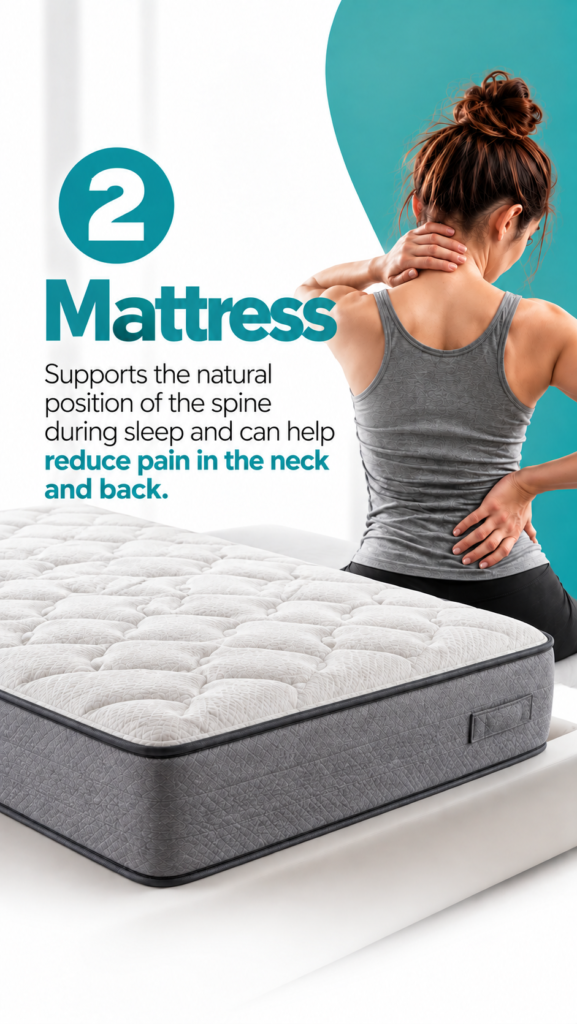
A supportive mattress can play an important role in back pain relief because the body spends several hours in the same position during sleep. The mattress should support the natural curves of the spine without allowing the body to sink too deeply. When the spine remains in a comfortable, neutral position, unnecessary pressure on the muscles, joints, and surrounding tissues can be reduced.
The right mattress can also contribute to neck pain relief by providing a stable base for the upper back and shoulders. A mattress that is too soft may allow parts of the body to sink unevenly, while one that is too firm may create uncomfortable pressure points. Appropriate support helps distribute body weight more evenly and can reduce excessive tension during the night.
Mattress choice should always be combined with a suitable pillow and a comfortable sleeping position. Together, they can provide better spinal support, reduce unnecessary strain, and improve sleep comfort. A supportive sleep environment can therefore be an important part of everyday neck and back relief, especially when combined with regular movement and targeted therapeutic exercises.
What should a supportive mattress be like?
A mattress designed to support spinal health and improve sleeping comfort should have the following characteristics:
- Adequate firmness – firm enough to support the body without creating excessive pressure.
- Good spinal support – helps maintain the natural curves of the spine during sleep.
- Even weight distribution – distributes body weight across the sleeping surface and reduces pressure points.
- Proper pressure relief – provides comfortable support for the shoulders, hips, and other areas exposed to greater pressure.
- Body contouring – adapts to the body without allowing excessive sinking.
- Good edge support – provides stability when changing position or getting in and out of bed.
- Breathable materials – help regulate temperature and improve sleeping comfort.
- Suitable size – provides enough space to change sleeping positions naturally during the night.
- Compatible with your sleeping position – support needs may differ for side, back, and stomach sleepers.
- Long-term stability – maintains its shape and supportive properties with regular use.
PILLOW
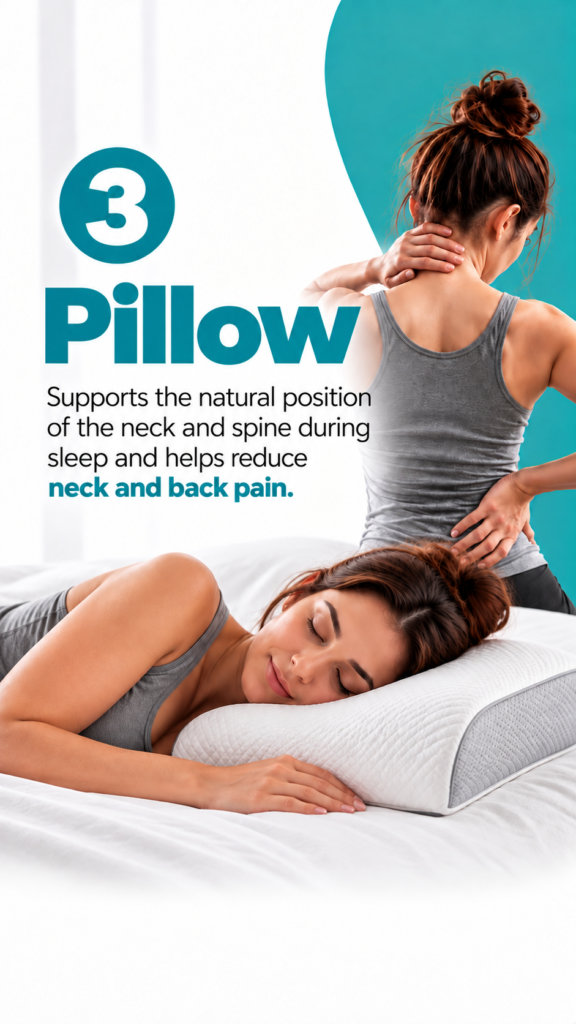
A supportive pillow can play an important role in neck pain relief because it helps maintain a comfortable position of the head and neck during sleep. If the pillow is too high or too low, the neck may remain bent for several hours. This can increase muscle tension and stiffness. The right pillow should support the natural position of the cervical spine and reduce unnecessary strain during the night.
Pillow support can also influence back pain because the head, neck, and spine function as one connected system. When the head is poorly supported, the neck position changes and the rest of the spine may compensate. Appropriate support can help maintain better spinal alignment and reduce prolonged stress on the muscles and joints. This is particularly important for people who already experience discomfort after sleeping.
The ideal pillow depends on your sleeping position, body structure, mattress, and individual support needs. Side sleepers usually need more support between the head and mattress, while back sleepers generally require a different pillow height. Combining the right pillow with a supportive mattress and a comfortable sleeping position can improve sleep quality and contribute to everyday neck and back relief.
What should a supportive pillow be like?
A pillow that supports neck and back health should have the following characteristics:
- Proper height – keeps the head and neck aligned with the rest of the spine.
- Adequate firmness – provides support without feeling excessively hard or allowing the head to sink too deeply.
- Good neck support – supports the natural curve of the cervical spine during sleep.
- Appropriate shape – follows the contours of the head, neck, and shoulders.
- Pressure relief – helps reduce pressure around the neck and shoulders.
- Suitable for your sleeping position – pillow height and firmness should match whether you sleep on your side or back.
- Stable support – maintains its shape and support throughout the night.
- Breathable materials – help regulate temperature and improve sleeping comfort.
- Compatible with your mattress – pillow height should also correspond to how deeply your body sinks into the mattress.
- Individual comfort – the pillow should feel comfortable while keeping the neck in a natural position.
ERGONOMIC CHAIR
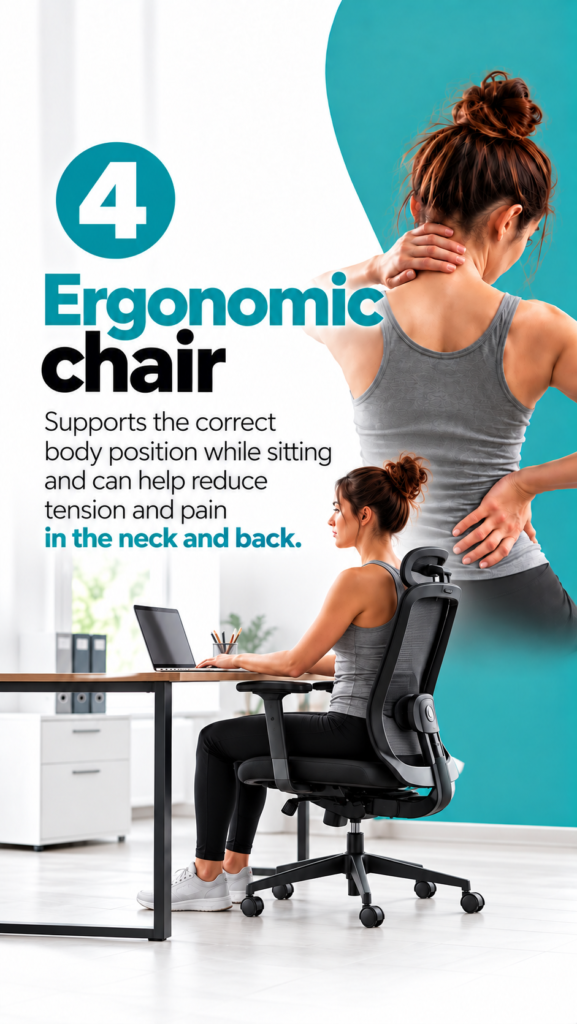
An ergonomic chair can help reduce back pain by providing appropriate support during prolonged sitting. A well-adjusted chair supports the natural curves of the spine and helps maintain a more comfortable sitting position. Proper lumbar support can reduce unnecessary strain on the lower back, while an appropriate seat height helps keep the pelvis and legs in a more stable position.
An ergonomic chair can also contribute to neck pain relief by supporting better positioning of the upper body. When the chair, desk, and screen are properly adjusted, there is less need to lean forward or constantly lower the head. This can reduce prolonged tension in the neck, shoulders, and upper back. Adjustable armrests can also help support the arms and reduce unnecessary load on the shoulder and neck muscles.
However, even the best ergonomic chair cannot eliminate the effects of sitting for many hours without movement. Regular position changes, movement breaks, and therapeutic exercises remain essential for maintaining mobility and reducing muscle tension. Combining an ergonomic workstation with healthy sitting habits can provide better spinal support and contribute to long-term neck and back relief.
What should an ergonomic chair be like?
An ergonomic chair that supports neck and back health should have the following characteristics:
- Adjustable seat height – allows the feet to rest firmly on the floor while keeping the knees in a comfortable position.
- Lumbar support – supports the natural curve of the lower back and helps reduce unnecessary strain.
- Supportive backrest – provides stable support for the lower and upper back.
- Adjustable backrest – allows the sitting position to be adapted to individual needs.
- Appropriate seat depth – supports the thighs without placing excessive pressure behind the knees.
- Adjustable armrests – support the arms and help reduce tension in the shoulders and neck.
- Stable seat base – provides good balance and stability during sitting.
- Swivel function – allows easier movement without unnecessary twisting of the spine.
- Comfortable seat cushioning – distributes pressure and improves comfort during prolonged sitting.
- Easy adjustment – allows the chair to be adapted to body height, desk height, and everyday activities.
EXCERCISES
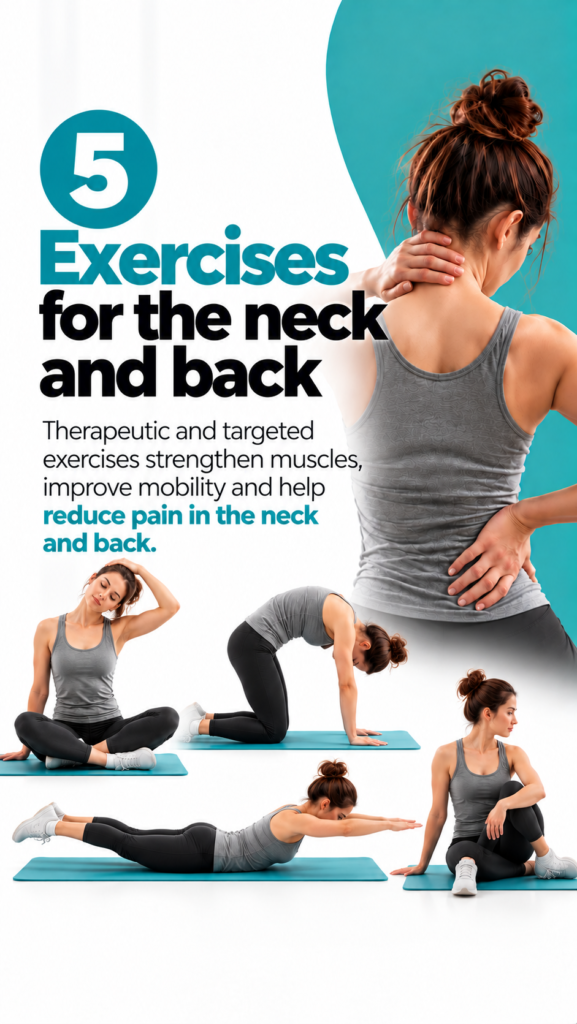
Targeted therapeutic exercises are an important part of managing neck and back pain. They can help improve mobility, reduce muscle stiffness, and restore better movement patterns. Exercises can also strengthen the muscles that support the spine, making everyday activities easier and reducing unnecessary strain on the neck and back.
A well-designed exercise program should include movements adapted to the individual’s needs, physical condition, and symptoms. Depending on the person, exercises may focus on mobility, flexibility, strength, stability, and posture. Regular exercise can also help counteract the effects of prolonged sitting, repetitive movements, and inactivity that often contribute to neck and back discomfort.
Consistency is essential for long-term neck and back relief. Therapeutic exercises should be performed regularly and with proper technique rather than only when pain appears. Combined with healthy movement habits, an ergonomic workspace, and appropriate supportive products, they can help improve physical function and support long-term spinal health.
What should therapeutic exercises be like?
Therapeutic exercises for neck and back pain should have the following characteristics:
- Targeted – exercises should address the specific muscles, joints, and movement patterns related to the problem.
- Individualized – the program should be adapted to the person’s symptoms, physical condition, mobility, and abilities.
- Progressive – exercise intensity and difficulty should increase gradually as strength and mobility improve.
- Controlled – movements should be performed slowly and with proper technique.
- Pain-aware – exercises should not cause a significant increase in pain or aggravate existing symptoms.
- Focused on mobility – appropriate exercises can help maintain or improve movement in the neck, back, shoulders, and hips.
- Focused on strength and stability – strengthening the muscles that support the spine can improve control during everyday activities.
- Regular – consistency is important for achieving and maintaining long-term results.
- Functional – exercises should support movements and positions used in everyday life.
- Professionally guided when necessary – people with persistent pain, neurological symptoms, injuries, or other health conditions may need an assessment and an individualized program from a qualified healthcare professional.

- Share:
