programizaledja@gmail.com
Login/Register
NECK AND BACK PAINNECK AND BACK PAIN
  • NECK AND BACK PAIN
  • ABOUT US..
  • PROGRAM FOR THE WHOLE BACK
  • NECK AND UPPER BACK PROGRAMS
  • LOWER BACK PAIN – this is important…
  • COMPANIES
  • Blog
  • CONTACT
    • KALENDAR ZA ZAKAZIVANJE – besplatne konsultacije
    • NEWSLETTER
  • Login/Register
  • SHOP
Back
  • NECK AND BACK PAIN
  • ABOUT US..
  • PROGRAM FOR THE WHOLE BACK
  • NECK AND UPPER BACK PROGRAMS
  • LOWER BACK PAIN – this is important…
  • COMPANIES
  • Blog
  • CONTACT
    • KALENDAR ZA ZAKAZIVANJE – besplatne konsultacije
    • NEWSLETTER
  • Login/Register
  • SHOP
  • Home
  • Blog
  • BOL U LEDJIMA
  • SITTING AND BACK PAIN – this is important…

BOL U LEDJIMA

31 May

SITTING AND BACK PAIN – this is important…
  • By PHYSIOTHERAPIST - back pain
  • In BOL U LEDJIMA, DEFORMITETI TELA, ISTEZANJE LEDJA, KINEZITERAPIJA, PROGRAMI ZA LEDJA, programi za zaposlene, TEAPEUTSKE VEŽBE
  • 0 comment
sedenje i bol u ledjima

Sitting and back pain are among the most common problems of the modern lifestyle today. Sitting for long periods of time, whether at work, in the car or at home, puts constant pressure on the spine and back muscles that are not designed for hours of static position. Over time, there is muscle fatigue, reduced circulation and pain that is often ignored until it becomes chronic.

What many people don’t know is that even sitting “correctly” is not enough if you don’t take regular breaks and move around. The spine is a dynamic structure that needs movement to remain functional and pain-free. When the body does not change position often enough, stiffness occurs in the lower back, shoulders and neck, which further aggravates the problem.

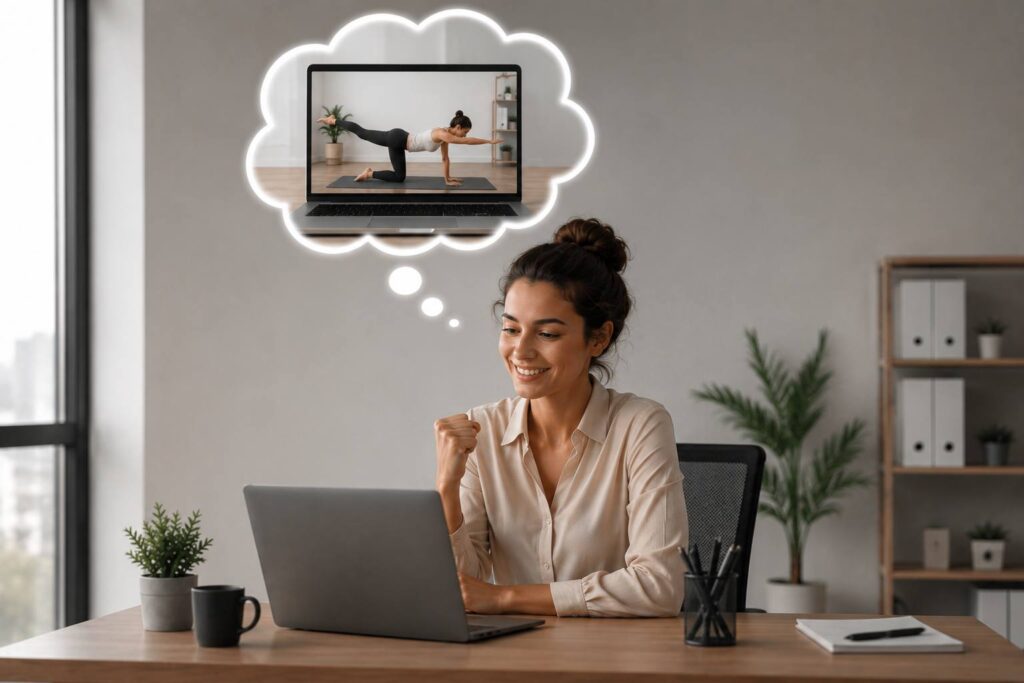
The good news is that in most cases, pain associated with sitting can be significantly reduced or completely resolved with simple habit changes and short, targeted exercises. The key is not in the perfect chair, but in how we move throughout the day and how often we activate the muscles that keep the spine stable.

how are you sitting

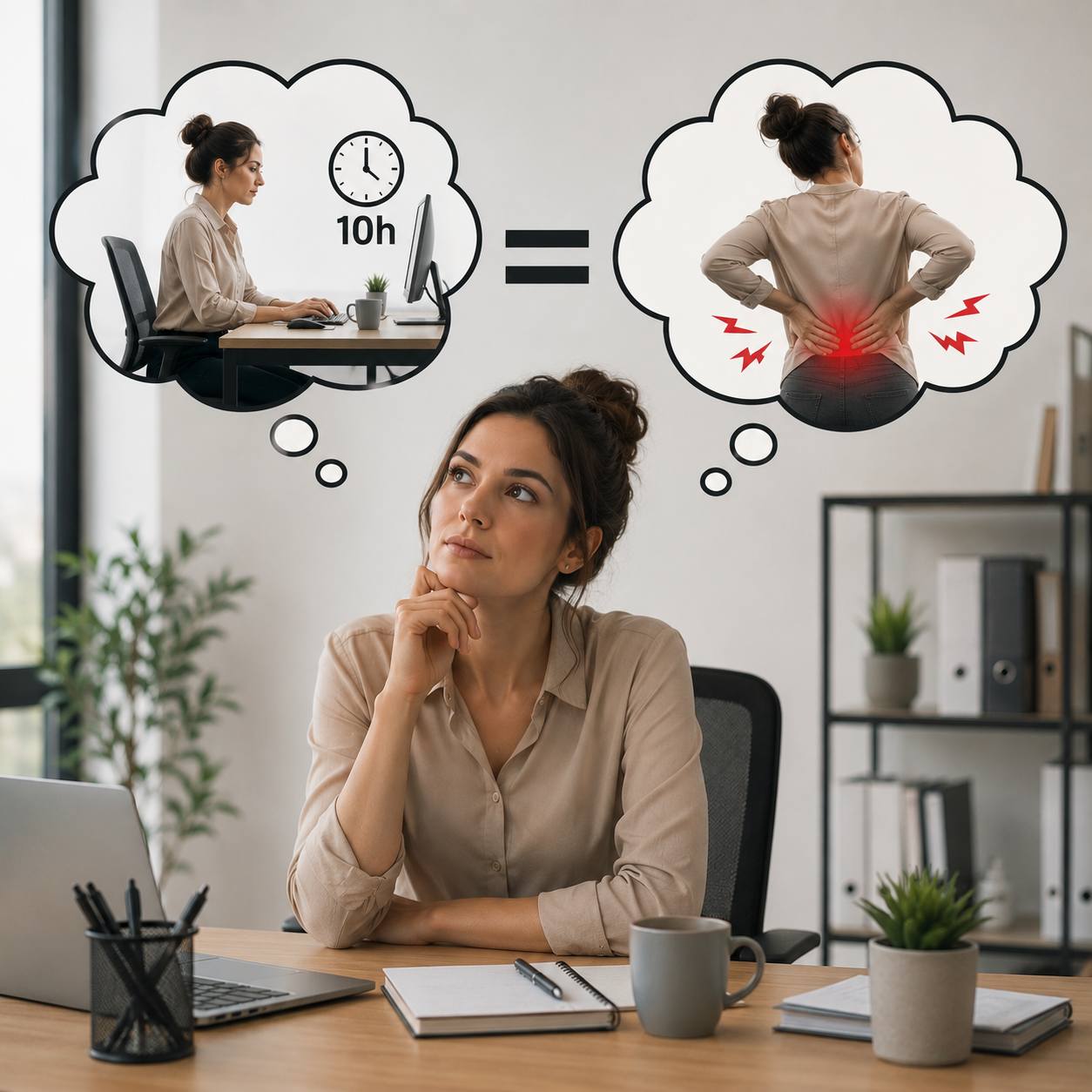
Long-term sitting, especially when it lasts for ten hours a day, gradually creates a series of changes in the body that directly affect the back:

  • It increases pressure on the lower spine and discs
  • It weakens the deep stabilizing muscles of the back and trunk
  • Tightens and shortens the hip flexor muscles
  • It reduces circulation in the muscles of the back and legs
  • It affects stiffness in the lumbar spine
  • It disturbs the natural balance of the muscles of the front and back of the body
  • Pulls the pelvis into an unnatural position
  • Increases tension in the neck and shoulders
  • Deteriorates body posture over time
  • It increases the risk of chronic back pain and sciatica

The changes that a person can feel due to long-term sitting usually occur gradually, but become more pronounced over time:

  • A feeling of stiffness in the lower back after standing up
  • Pain in the lumbar part of the spine that increases during the day
  • Heaviness and fatigue in the back even without physical effort
  • Tightness in the hips and front of the thighs
  • Tension in the neck and shoulders
  • Reduced mobility when bending or turning
  • Tingling or discomfort in the legs when sitting for a long time
  • Faster fatigue when walking or standing after long sitting
  • Feeling of “tight” back that does not go away easily
  • Intermittent or constant pain that returns every day after sitting

DIFFICULTY PERFORMING DAILY ACTIVITIES

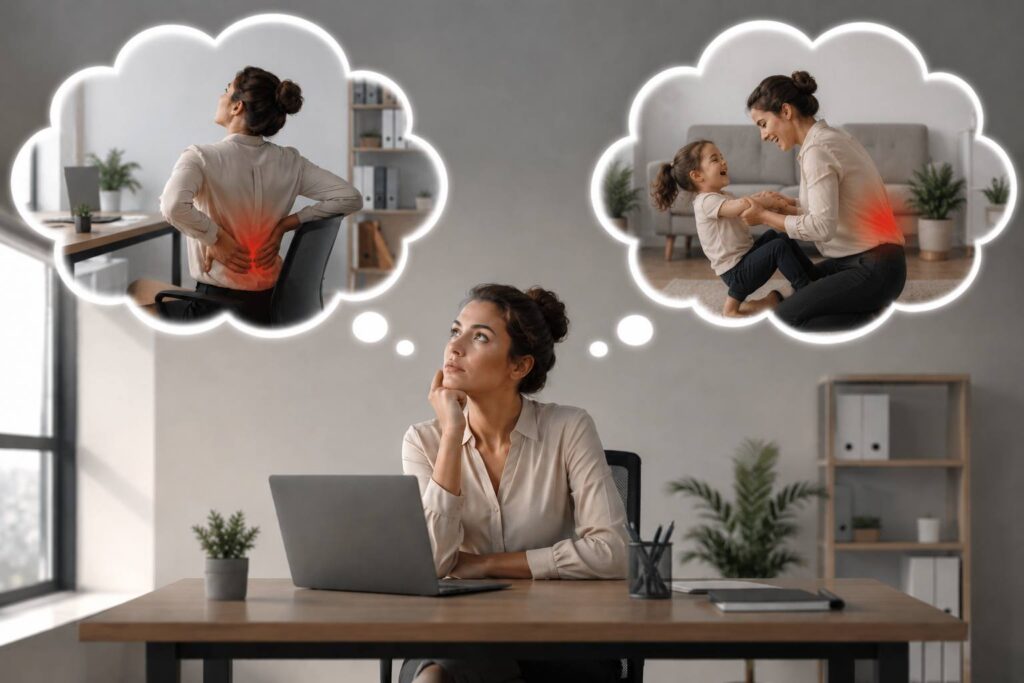
When back pain and stiffness develop as a result of prolonged sitting, they begin to affect even the most mundane daily activities. Movements that were once simple, such as bending down to tie shoelaces, getting out of bed, or lifting light objects, become slower and accompanied by discomfort. The body begins to “save” movement, so the person unconsciously changes the way they move to avoid pain.

Over time, this limitation extends to everyday tasks such as standing for long periods of time, walking or doing housework. There is often a need for more frequent rest, leaning or changing position, because the back cannot bear the load for a long time. Thus, the overall functionality of the body decreases, and the quality of life becomes directly related to the intensity of back pain.

sedenje i bol u ledjima

THE SOLUTION IS A CHANGE IN DAILY ACTIVITIES...

The solution to problems caused by prolonged sitting begins with properly organized daily activities and the application of workplace ergonomics. This means that the body position during work should support the natural curve of the spine, with a properly adjusted chair, the screen at eye level and feet resting on the floor. In this way, unnecessary pressure on the back is reduced and allows the body to work in a more stable and relieved position.

An important part of recovery is progressive muscle relaxation, which helps the body recognize and release accumulated tension. Through the conscious tightening and relaxation of muscle groups, chronic tension in the back, neck and shoulders is reduced, which directly affects the reduction of pain and improvement of mobility. In addition, controlling stress and tension plays a key role, as psychological pressure often increases physical pain.

In addition, a combination of shorter and longer therapeutic exercises helps to strengthen the stabilizing muscles and restore the natural function of the spine. Short workouts throughout the day break up long periods of sitting, while longer, targeted workouts work on long-term stability and strength. When all these methods are combined, the body gradually restores its balance, reduces pain and allows normal and pain-free movement in everyday life again.

sedenje i bol u ledjima
  • Education on workplace ergonomics and proper sitting position
  • Guided exercises to relieve the back, neck and shoulders
  • Therapeutic exercises for strengthening deep stabilizing muscles
  • Mobility exercises for the hips, pelvis and spine
  • Routines to reduce stiffness and improve circulation
  • Progressive muscle relaxation techniques
  • Methods for controlling tension and stress
  • Guidelines for integrating short breaks and activation during the workday
  • A program to improve posture in everyday activities
  • A plan for long-term pain reduction and recurrence prevention
  •  
SAZNAJ VIŠE...

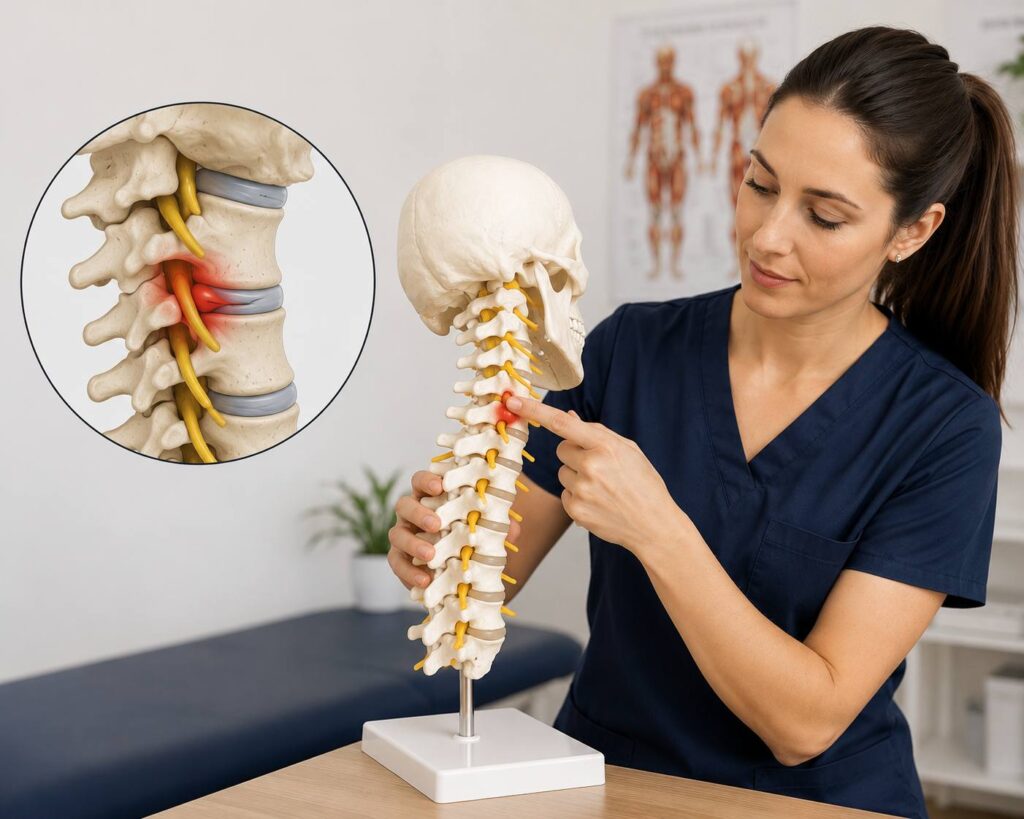
If you have neck pain as a result of prolonged sitting, the following symptoms and changes most often occur:

  • Stiffness of the neck, especially after working for a long time at the computer
  • Pain that spreads to the shoulders and upper back
  • Limited mobility when turning or tilting the head
  • A feeling of heaviness in the nape of the neck and back of the head
  • Frequent tension headaches
  • Tension and tension in the trapezius muscles
  • Rapid neck fatigue when maintaining an upright position
  • Increased sensitivity to stress and worsening of symptoms during stressful periods
  • Unpleasant feeling of “stiff” neck in the morning or after sitting
  • Occasional tingling or discomfort in the hands in more severe cases
SAZNAJ VIŠE...
diskus hernija
diskus hernija

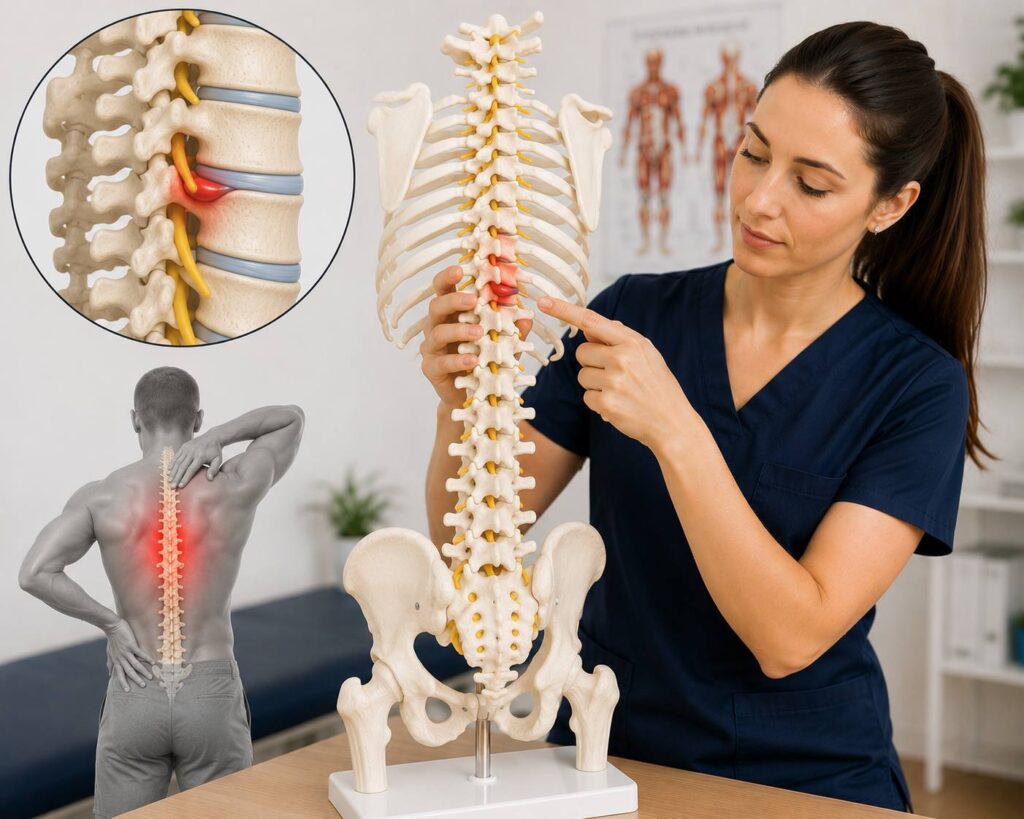
If you have pain in the thoracic spine as a result of prolonged sitting, the following symptoms may occur most often:

  • Stiffness between the shoulder blades and in the middle of the back
  • Pain when sitting in the same position for a long time
  • Feeling of “tightness” in the thoracic spine
  • Reduced mobility when turning the trunk
  • Discomfort when taking a deep breath or stretching
  • Muscle tension around the shoulder blades and chest
  • A feeling of blockage in the middle of the back
  • Increased stiffness after getting up from sitting
  • Upper and middle back fatigue during the day
  • Compensation of poor posture through hunched shoulders
SAZNAJ VIŠE...

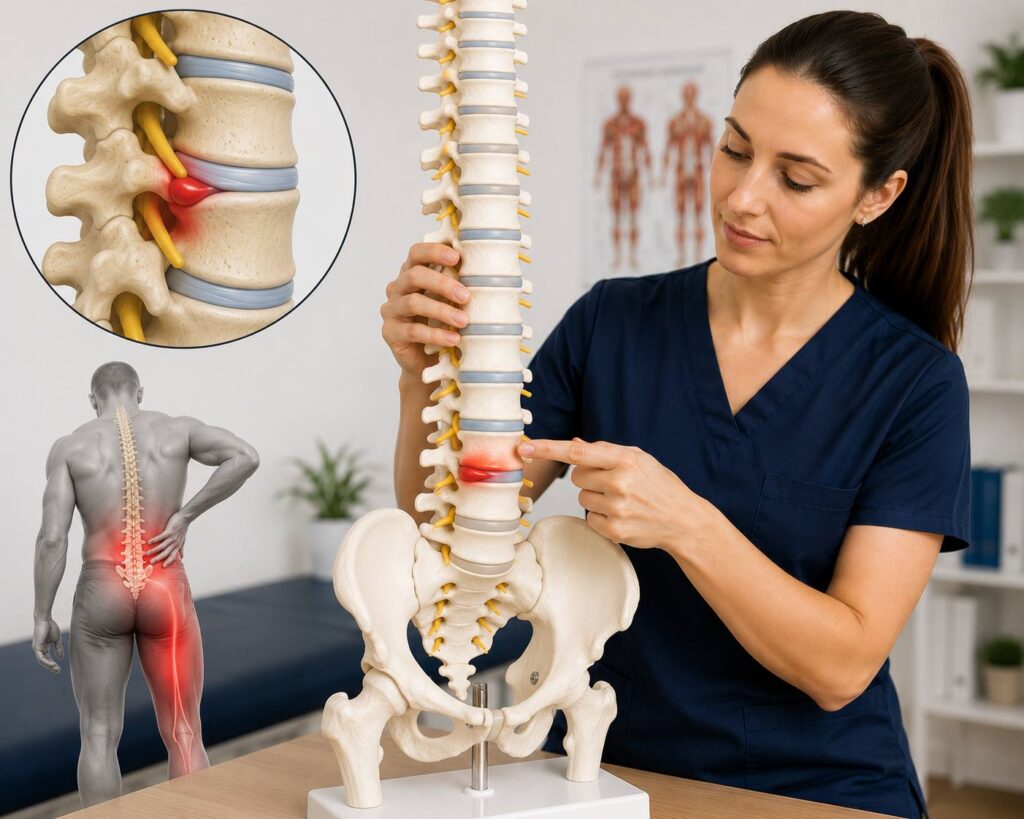
If you have lower back pain as a result of prolonged sitting, the following changes and symptoms most often occur:

  • Sensation of stiffness in lumbar spine after rising
  • Pain that intensifies when sitting for a long time
  • Weight and pressure in the lower back during the day
  • Limited mobility when bending or lifting
  • Tightening of the muscles in the lower back
  • Discomfort when standing for a long time after sitting
  • Occasionally the pain spreads to the hips or buttocks
  • A feeling of “blockage” in the lower part of the spine
  • Fatigue faster when walking or doing physical activity
  • Increased tension after a long stay in the same position
SAZNAJ VIŠE...
diskus hernija

PREVENTIVE MEASURES ARE A MANDATORY PART...

Prevention of back pain caused by prolonged sitting plays a key role as it prevents small, occasional symptoms from developing into a chronic problem. When the first signs of stiffness, tightness or discomfort are recognized in time, it is possible to react with simple changes in daily habits and thus avoid more serious disorders of the spinal function.

Timely response means not waiting for the pain to become intense or limiting, but to immediately introduce corrective measures such as proper sitting, more frequent breaks, targeted mobilization and exercises. In this way, the load on the spinal column is reduced and allows the muscles to regain their stabilizing role, which directly affects the reduction of pain and improvement of mobility.

When prevention and early intervention are combined, the body remains functional and resistant to the effects of a modern, sedentary lifestyle. This not only reduces the risk of chronic back pain, but also improves the overall quality of life, work ability and daily energy.

INDIVIDUALNE KONSULTACIJE...

INFO ....
SEDENJE I BOL U LEDJIMA
Tags:bol u donjem delu leđabol u leđimabol u vratu i leđimadiskus hernijadugotrajno sedenjeergonomija radnog mestafizioterapijakancelarijski posaološe držanje telalumbalni bolnapetost mišića leđanepravilno sedenjeposturalni poremećajiprevencija bola u leđimarad za računaromsedenje i bol u leđimasedentaran način životaukočenost leđavežbe za leđazdravlje kičme
  • Share:
User Avatar
PHYSIOTHERAPIST - back pain
Therapeutic programs for back health 20+ years of experience

You may also like

bol u donjem delu ledja

LOWER BACK – PROGRAM

  • June 6, 2026
  • by PHYSIOTHERAPIST - back pain
  • in BOL U LEDJIMA
LOWER BACK PAIN is one of the most common health problems today. It can occur in people of all...
bol u donjem delu ledja
LOWER BACK PAIN – this is important…
May 31, 2026
sedenje, bol u vratu i ledjima
SEDENJE, BOL U VRATU I LEDJIMA, DISKUS HERNIJA…
May 30, 2026
bol u vratu i ledjima
THE PAIN IN THE NECK AND THE BACK BEGINS DURING SLEEPING..
May 24, 2026

Leave A Reply Cancel reply

You must be logged in to post a comment.

LATEST POSTS

POSTURE SENSOR
SMART POSTURE SENSOR
15Oct,2026
POSTURE SUPPORT
POSTURE SUPPORT – healthier back
12Oct,2026
screen glasses
SCREEN GLASSES – benefit for eyes
12Oct,2026
egonomic chair
ERGONOMIC CHAIR – why it matters..
12Oct,2026
PRODUCTS FOR NECK AND BACK RELIFE
07Oct,2026
bol u donjem delu ledja
LOWER BACK – PROGRAM
06Jun,2026

TECHNIQUES FOR PREVENTING AND REDUCING BACK PAIN

PHYSIOTHERAPIST

ELIVIDA HEALTH LTD

128 City Road, London, United Kingdom, EC1V 2NX


saradnja sa pravnim licima

VICTORIA LINEA, DOO Beograd

Glavna 37-2

Matični broj: 22022032


programizaledja@gmail.com


  • NECK AND BACK PAIN
  • ABOUT US..
  • PROGRAM FOR THE WHOLE BACK
  • NECK AND UPPER BACK PROGRAMS
  • LOWER BACK PAIN – this is important…
  • COMPANIES
  • Blog
  • CONTACT
    • KALENDAR ZA ZAKAZIVANJE – besplatne konsultacije
    • NEWSLETTER
  • Login/Register
  • SHOP
  • NECK AND BACK PAIN
  • Privacy policy
  • Terms & Conditions
  • Disclaimer
  • Refund and Returns policy
  • Accessibility Statement
  • Affiliate Disclosure
  • Customer Support
  • Cookie Policy (EU)

Manage Consent
To provide the best experiences, we use technologies like cookies to store and/or access device information. Consenting to these technologies will allow us to process data such as browsing behavior or unique IDs on this site. Not consenting or withdrawing consent, may adversely affect certain features and functions.
Functional Always active
The technical storage or access is strictly necessary for the legitimate purpose of enabling the use of a specific service explicitly requested by the subscriber or user, or for the sole purpose of carrying out the transmission of a communication over an electronic communications network.
Preferences
The technical storage or access is necessary for the legitimate purpose of storing preferences that are not requested by the subscriber or user.
Statistics
The technical storage or access that is used exclusively for statistical purposes. The technical storage or access that is used exclusively for anonymous statistical purposes. Without a subpoena, voluntary compliance on the part of your Internet Service Provider, or additional records from a third party, information stored or retrieved for this purpose alone cannot usually be used to identify you.
Marketing
The technical storage or access is required to create user profiles to send advertising, or to track the user on a website or across several websites for similar marketing purposes.
  • Manage options
  • Manage services
  • Manage {vendor_count} vendors
  • Read more about these purposes
View preferences
  • {title}
  • {title}
  • {title}