LOWER BACK PAIN – this is important…
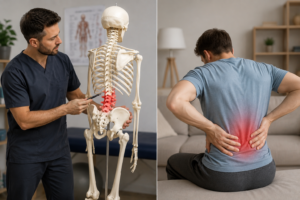
Pain in the lower back is one of the most common health problems of modern man and can significantly affect daily activities, work ability and quality of life. Many people experience pain in the lumbar part of the spine at least once during their lives, and in a certain number of people the complaints can be repeated or last for a long period of time. Pain can appear suddenly after a certain movement or gradually, due to long-term stress and bad habits.
Modern lifestyle significantly contributes to the frequency of this problem. Long-term sitting, insufficient physical activity, poor posture and daily stress lead to weakening of the muscles that stabilize the spine. When the muscles of the trunk and lower back do not provide adequate support, the load is transferred to the joints, ligaments and discs, which can cause pain and a feeling of stiffness.
It is important to understand that lower back pain is not just a result of aging or physical work. Its development is influenced by many factors, including the way you move, physical condition, work environment and daily habits. Timely recognition of the cause and application of appropriate exercises and corrective measures can contribute to reducing pain, improving function and preventing future problems.
PROBLEMS ARE THE CONSEQUENCE OF DEGENERATIVE CHANGES, MUSCLE WEAKNESS AND IMPROPER PERFORMANCE OF DAILY ACTIVITIES...
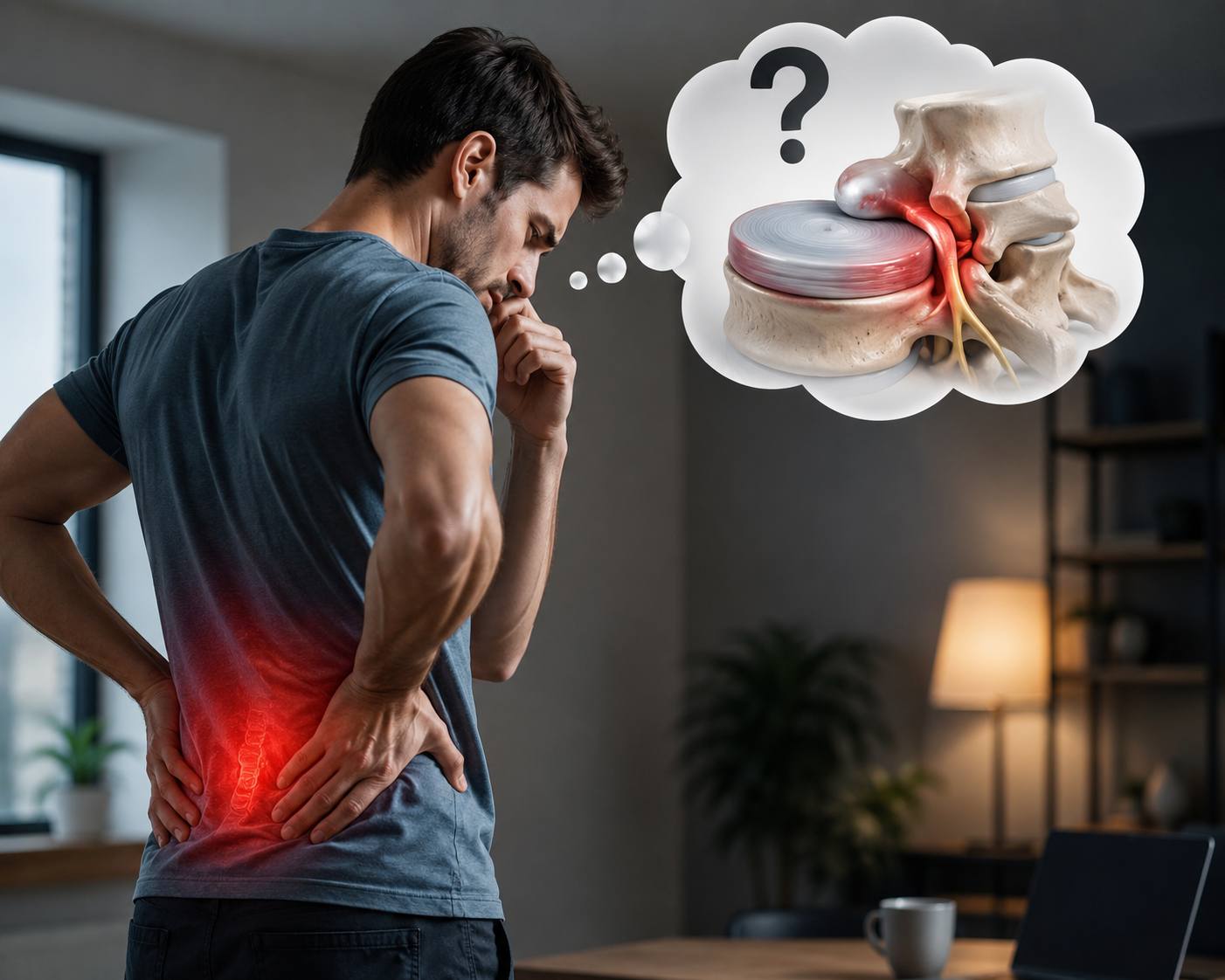
degenerative changes, depending on the damage, cause pain in a certain part....
- Degeneration of the intervertebral discs (lumbar discopathy) – pain in the lower back, especially after prolonged sitting or straining.
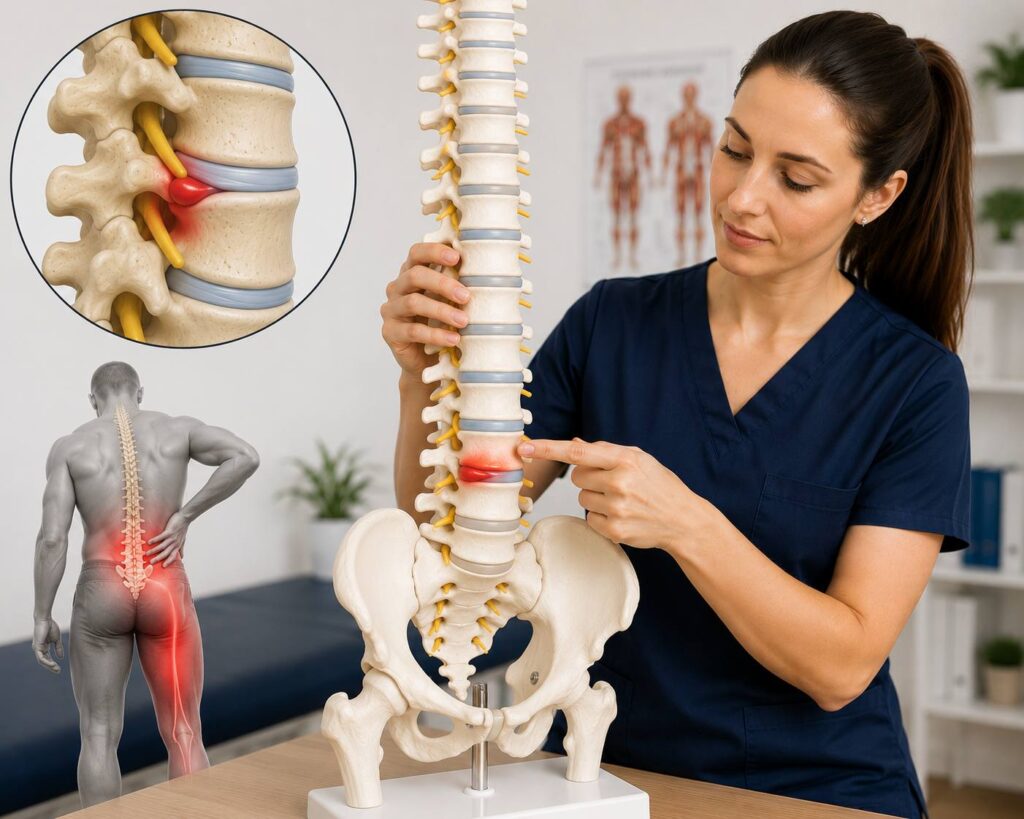
- Disc protrusion or herniation – pain in the lower back that can spread to the gluteus, leg or foot.
- Lumbar spondylosis – pain and stiffness in the lower back, especially after rest.
- Osteophytes (bone growths) – can cause local pain and limited spinal mobility.
- Arthrosis of the facet joints – pain when bending backwards, turning the trunk and standing for a long time.
- Narrowing of the intervertebral space – increased load on the joints and the appearance of chronic pain.
- Foraminal stenosis – pressure on the nerves with pain, tingling or weakness in the leg.
- Spinal stenosis – pain, heaviness in the legs and difficulty walking long distances.
- Degenerative spondylolisthesis – pain in the lower back with a feeling of instability and fatigue.
- Degenerative changes in the sacroiliac joints – pain in the lower back, pelvis and gluteal region.
- Degenerative changes with pressure on the sciatic nerve – pain that spreads down the back of the leg, often accompanied by tingling and burning.
- Multilevel degenerative changes of the lumbar spine – a combination of pain, stiffness, reduced mobility and functional limitations.
THE MOST COMMON DAILY ACTIVITIES WHICH INCREASE PAIN...
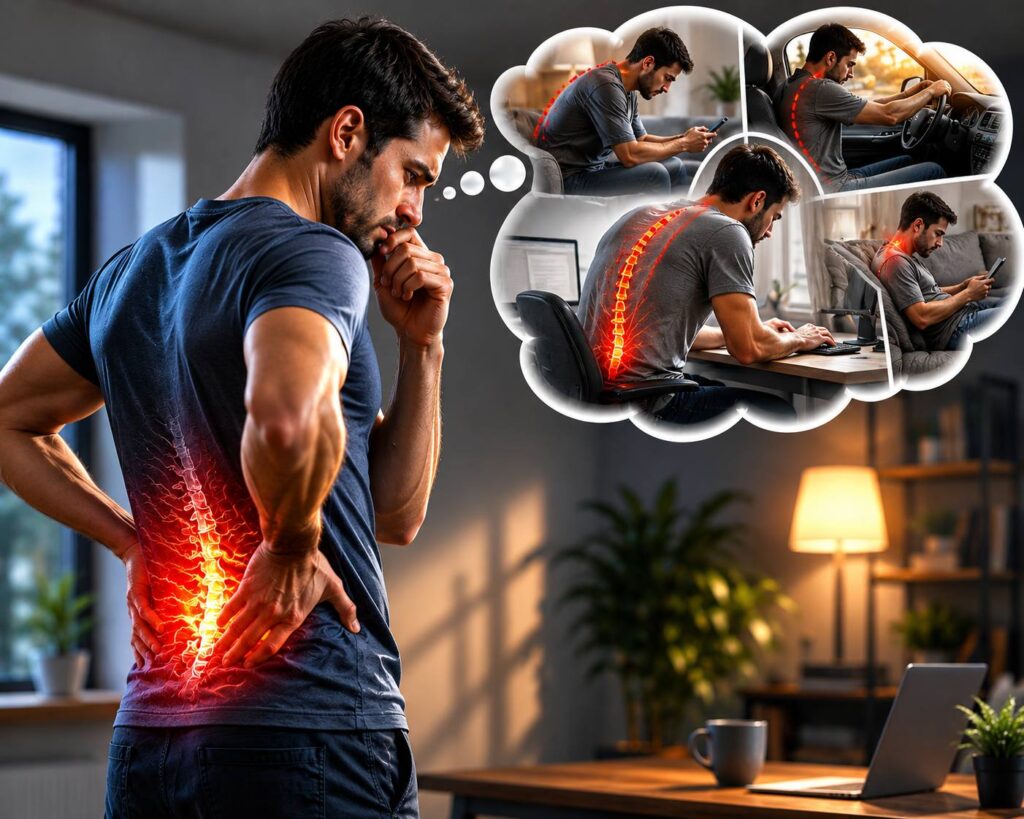
sitting, positions while driving and resting...
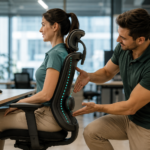
Certain positions during the day can significantly increase lower back pain, especially when held for long periods of time. Prolonged sitting increases the load on the lumbar discs and often leads to stiffness and increased pain when standing up. Similarly, driving for hours in a car keeps the body in a static position, with additional vibrations that can strain the lower spine. Although the mobile phone is most often associated with neck pain, using it in a hunched position while sitting can lead to rounding of the back, loss of the natural curve of the spine and additional load on the lower back, which can increase existing complaints.
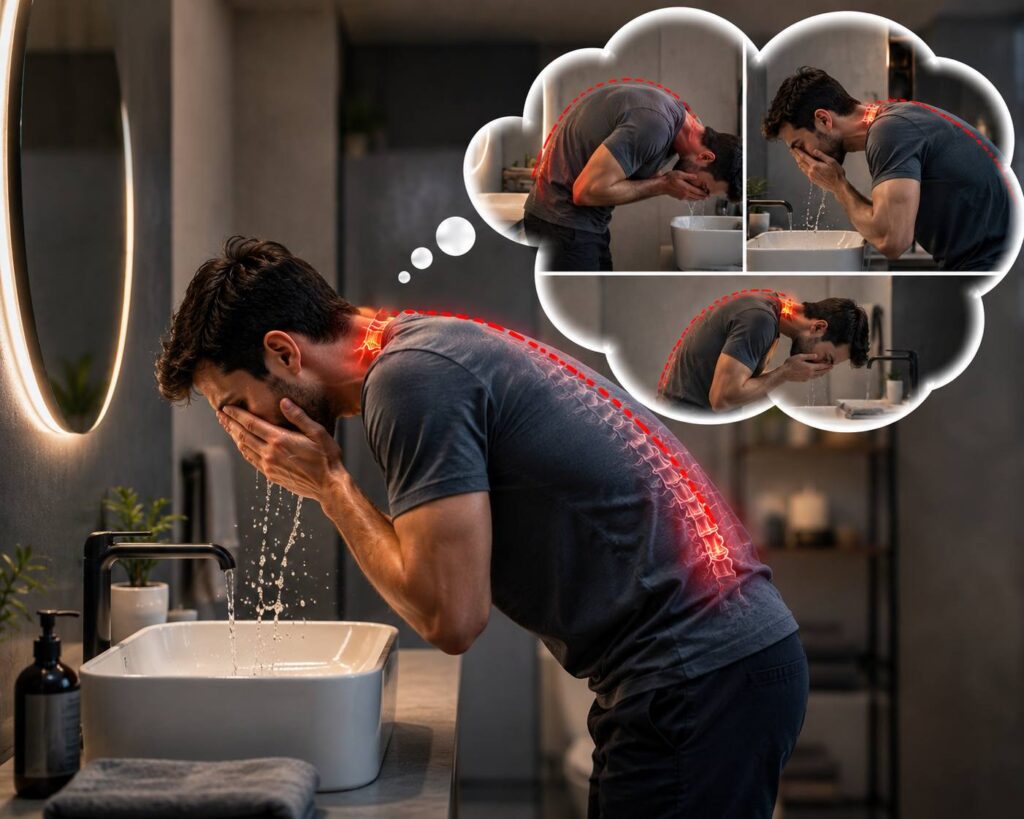
morning hygiene
washing, brushing teeth and other activities performed over the sink can increase pain in the lower back if performed in an incorrect position. Bending the trunk forward without support and staying in that position for several minutes increases the load on the lumbar spine and surrounding muscles. In people who already have pain or degenerative changes, this position can cause additional tension, stiffness or intensification of symptoms. Using one-handed support on the sink and slightly bending the knees can help distribute the load more evenly and reduce pressure on the lower back.
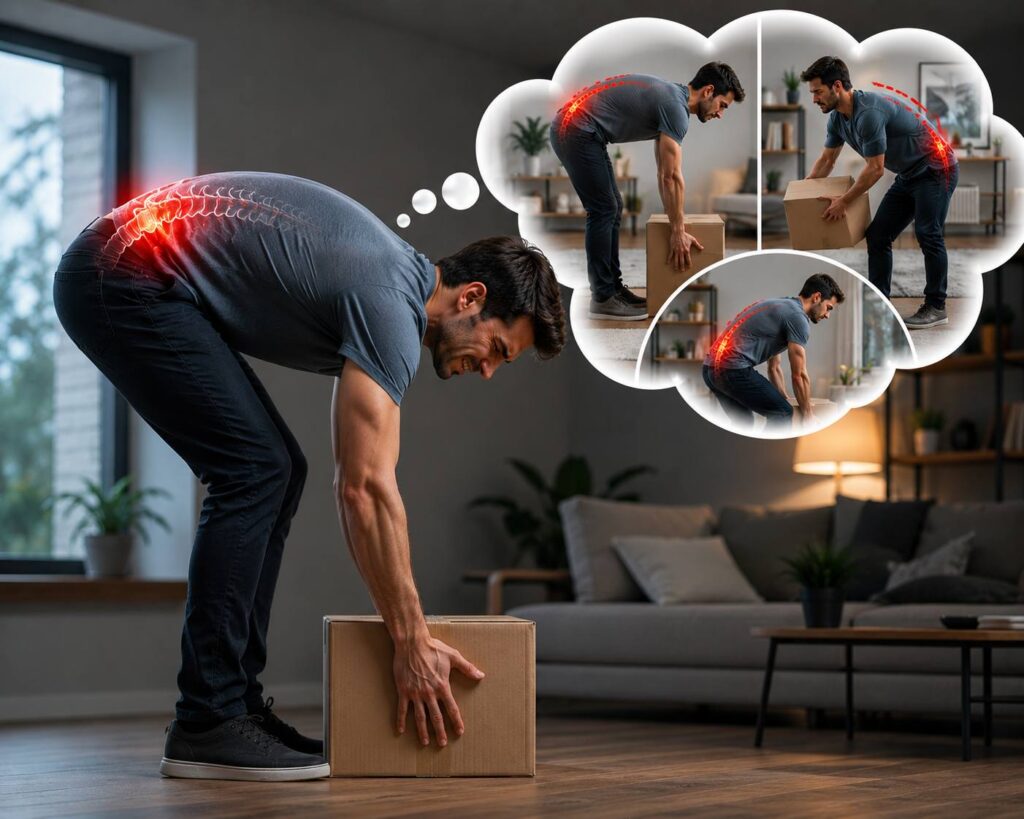
lifting an object...
Lifting objects from the floor is one of the most common movements that can cause or increase pain in the lower back if performed incorrectly. Bending only from the waist, with a rounded back and extended legs, creates a large load on the lumbar discs, ligaments and muscles. The risk is even greater when lifting a heavy object or when the movement is performed suddenly. Correct technique involves bending the knees and hips, bringing the object closer to the body and activating the leg muscles when lifting, which significantly reduces the load on the lower back and the risk of injury.
carrying bags...
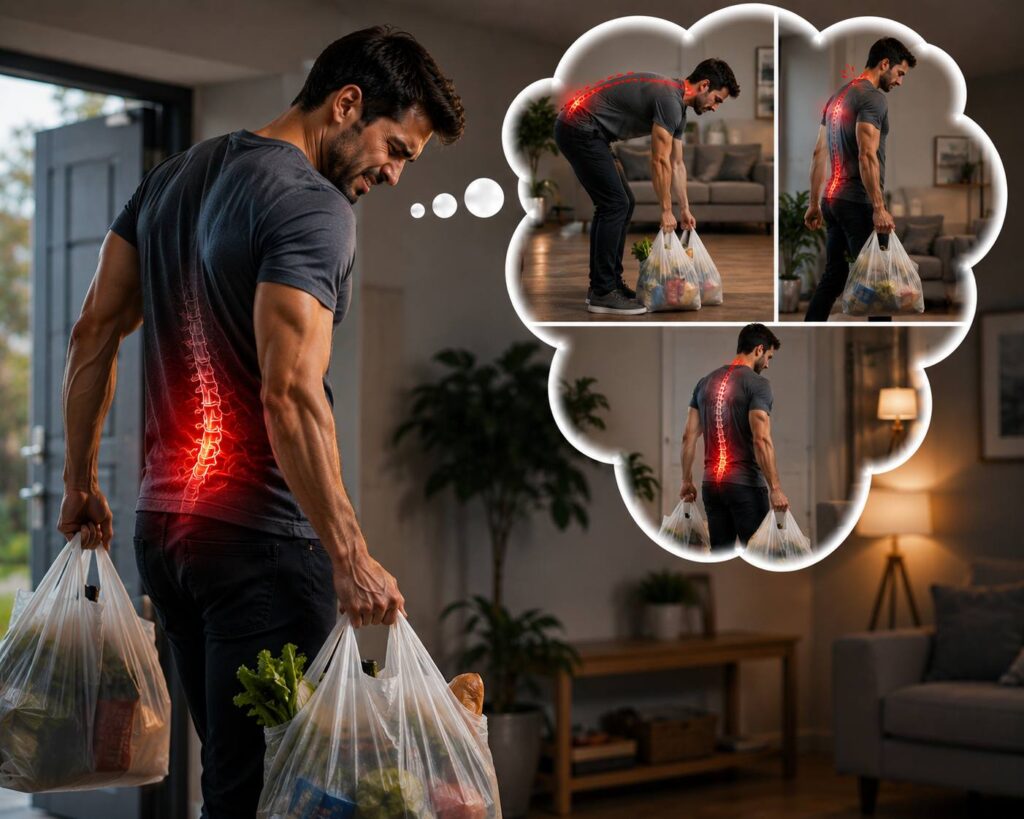
Carrying grocery bags can put a significant strain on the lower back, especially when the weight is carried on only one side of the body. Such a position leads to an uneven load on the spine and trunk muscles, which can cause pain, fatigue and a feeling of tightness in the lower back. Heavier bags should be distributed evenly on both sides or assistive devices should be used when possible, in order to reduce the load and maintain proper posture while walking.
THERE IS A SOLUTION...
Daily activities such as sitting, driving, lifting objects, carrying bags and household chores are an integral part of life and it is not realistic to completely avoid them. However, the way we perform them can have a big impact on the health of the spine. When we learn how to reduce unnecessary strain and protect the back during everyday movements, the risk of pain and worsening of existing ailments is significantly reduced.
The spine is exposed to various loads every day, but with proper movement patterns , stronger stabilizing muscles and better posture control, these loads become much easier to bear. The goal is not to stop doing activities, but to learn how to do them without excessive stress on the joints, discs and muscles of the lower back. In this way, micro-strains are reduced, which can turn into a chronic problem over time.
When daily habits are corrected and appropriate exercises for stability, mobility and strength are introduced , the body becomes more resistant to loads. Muscles assume their protective role, movements become more efficient, and pain gradually decreases or disappears completely. This is precisely why education and proper movement are an important part of long-term preservation of the health of the lower back.
ONE COMPLETE PROGRAM FOR LOW BACK PAIN
start today and improve the quality of your life...
less pain, better mobility...
THE PROGRAM WAS CREATED BY PHYSIOTHERAPISTS ....
Don’t wait until lower back pain becomes so severe that it starts to limit your daily activities. The first signs of discomfort, stiffness or occasional pain are often a warning that the spine needs attention. Timely response allows the problem to be solved at an early stage, before major functional limitations and a longer recovery occur.
The earlier you recognize the problem and take the appropriate steps through education, correction of daily habits and targeted exercises, the greater the chances are for a faster and more effective reduction of complaints. Act today and give your back the support it needs to preserve mobility, functionality and quality of life in the long run.
OVER 50 VIDEO EXERCISES
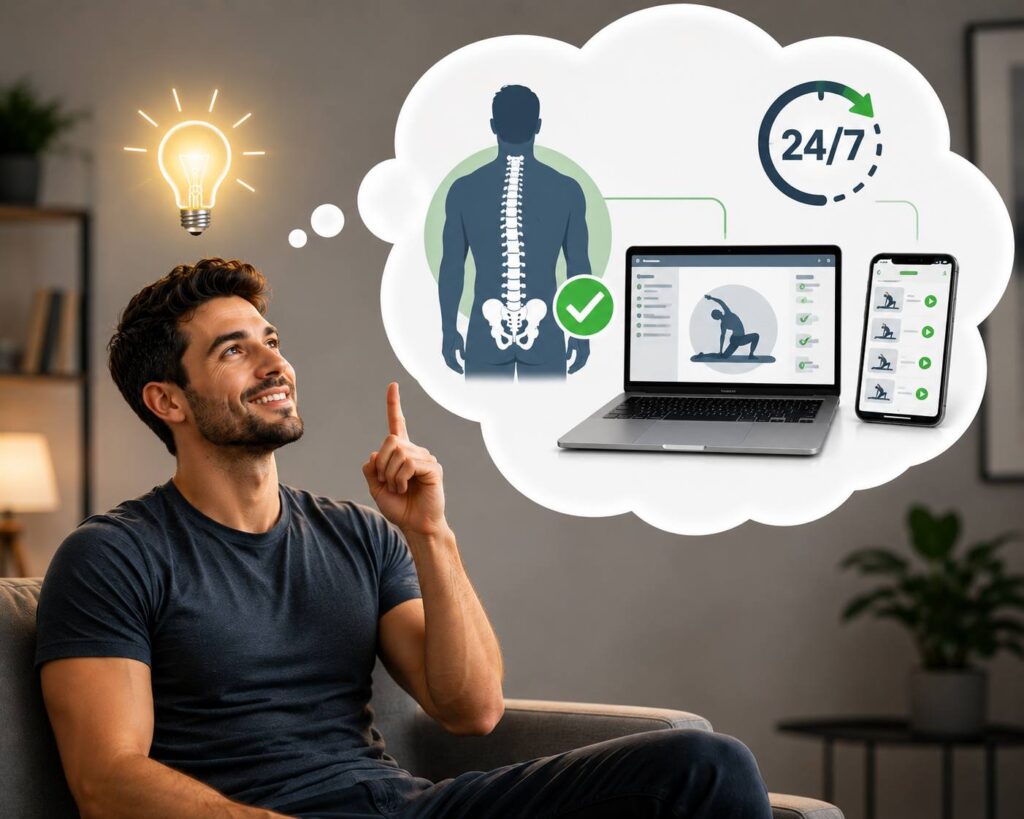
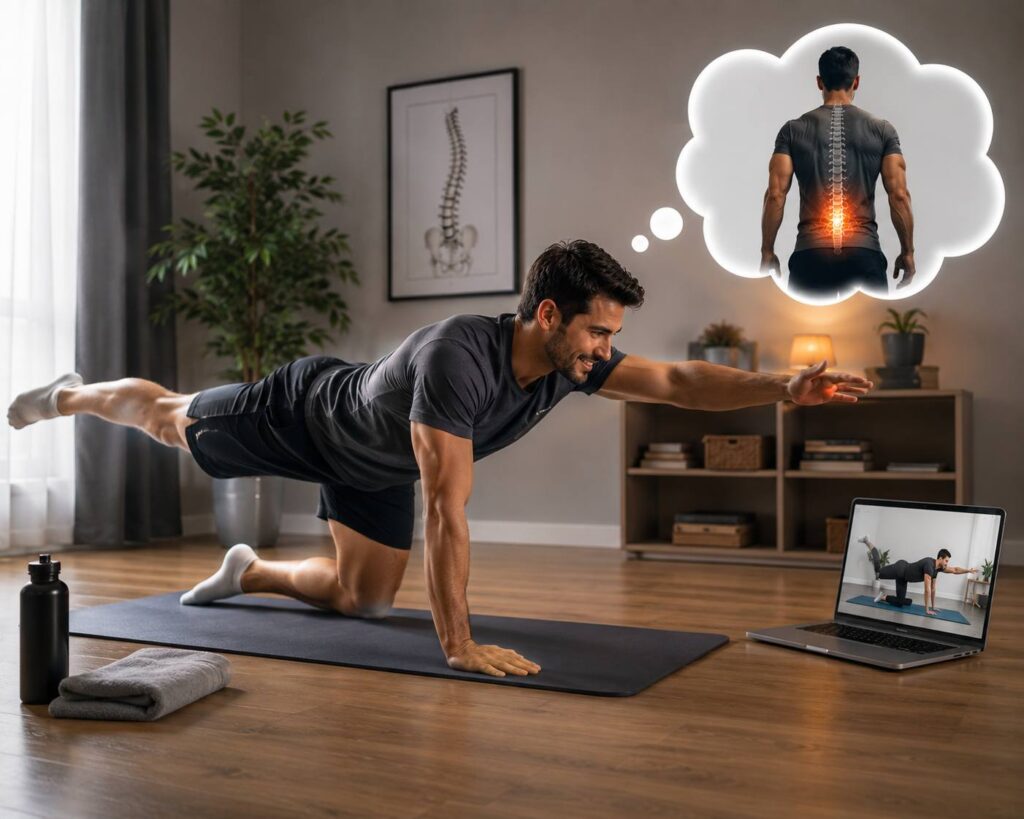
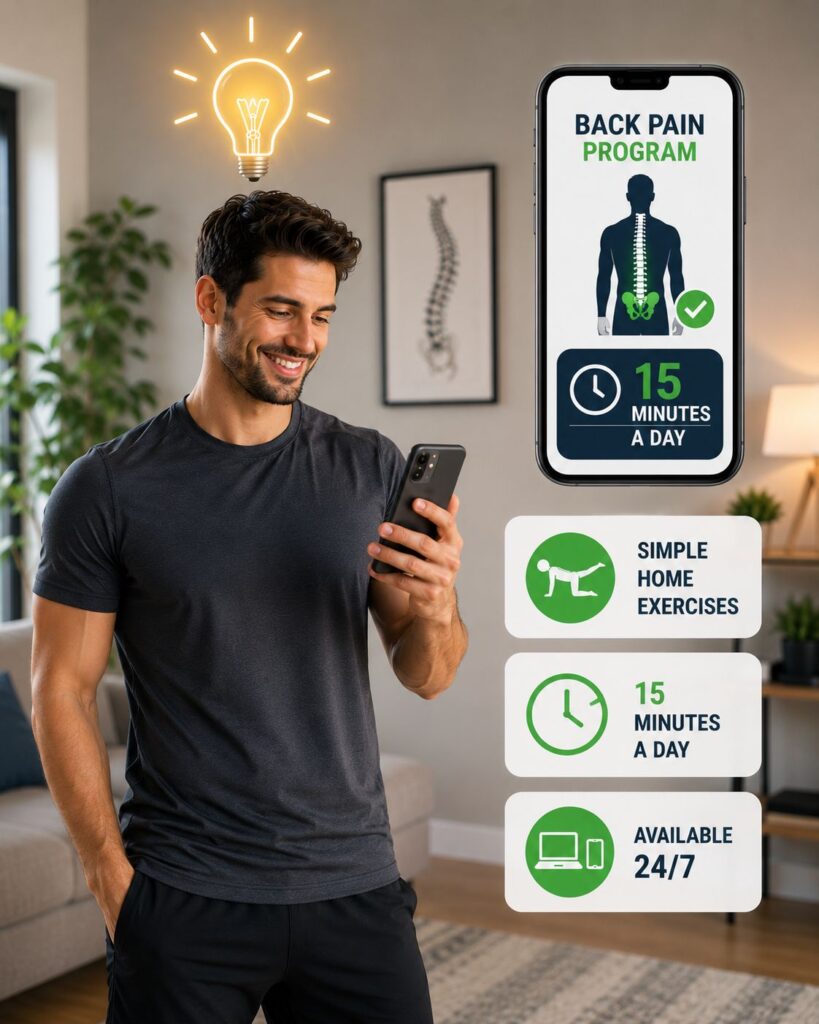
expertly selected video exercises for the lower back, designed to guide you step by step through the process of recovery and strengthening of the spine. Exercises include mobilizing, stretching, stabilizing and strengthening the muscles that support the lumbar spine, with clear video instructions for proper execution. Thanks to the large number of exercises and different levels of difficulty, the program enables gradual progression and adaptation to the individual needs and capabilities of each user.
it is possible without lower back pain...
“As a person who spends most of the day at a computer, I often had pain and stiffness in my lower back. After I started regularly applying the program and the advice on correct positions during work and daily activities, I noticed a significant reduction in pain. The exercises are easy to follow, and the biggest advantage is that I can do them when it suits me. Today, I can move more easily, sit longer without discomfort and have much more energy during the day.”
– Marko, IT sector
USER: MY BACK DOESN'T HURT ANYMORE.....
PRIJAVI SE I TI....
- Share:
You may also like

LOWER BACK – PROGRAM
- June 6, 2026
- by PHYSIOTHERAPIST - back pain
- in BOL U LEDJIMA
SITTING AND BACK PAIN – this is important…